
"Cash flow is dead." Every investor forum says it, and at 7-percent-plus mortgage rates against 2022 asking prices, the complaint is half right — almost nothing pencils at list. But that sentence has a silent second half nobody finishes: cash flow is dead at the asking price. At the right price, it's alive on the same listings everyone is scrolling past.
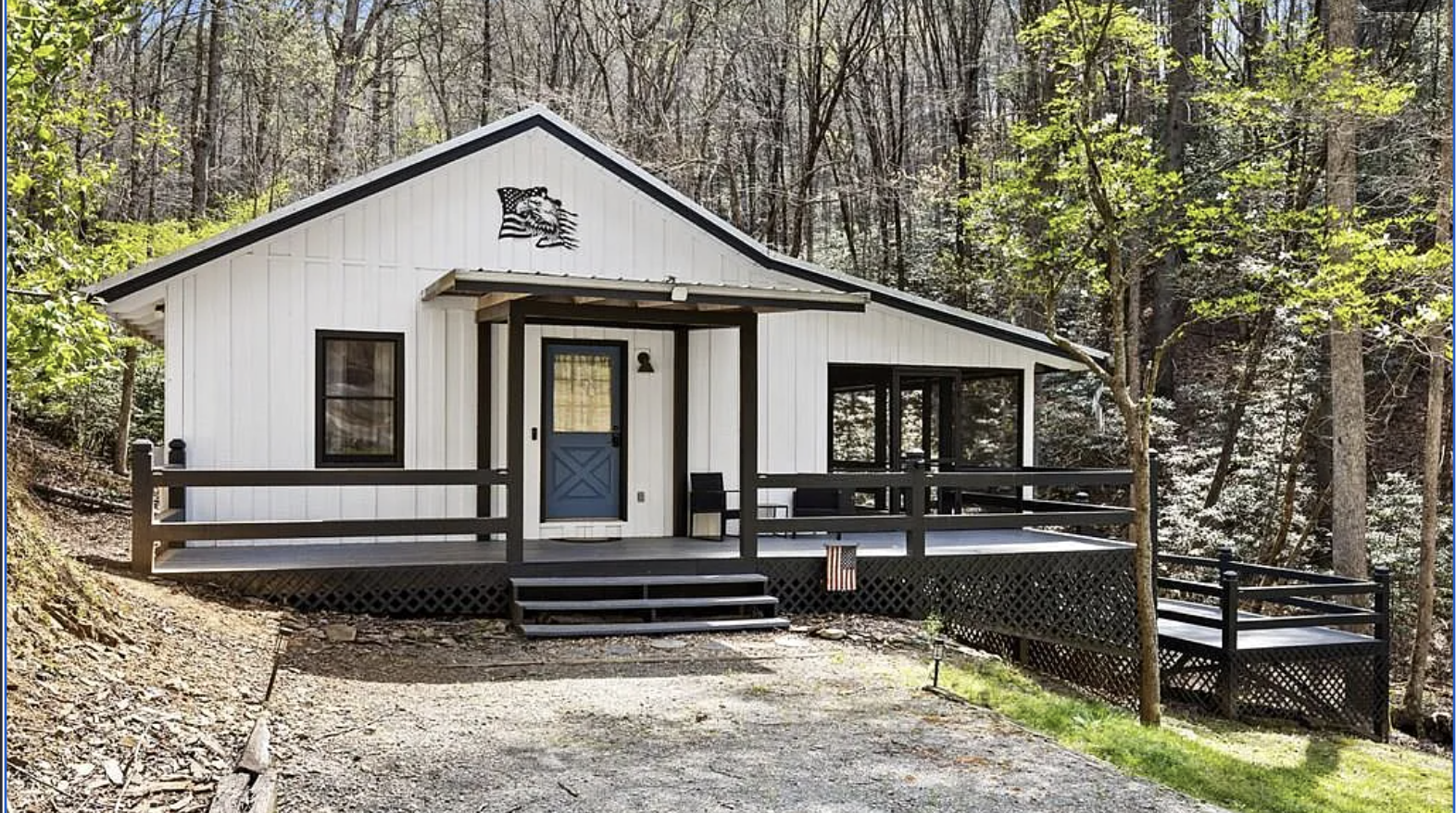
Last month we tested that claim with our own capital. We closed on a property that was listed at $324,900 and marketed against the seller's own April 2026 appraisal of $340,000. It had sat through more than 200 cumulative days on market across multiple listing attempts. We bought it for $270,000. At closing, the lender's independent appraisal came in at $353,000 — roughly $83,000 of equity at our basis, on day one.
No off-market whisper network. No wholesaler. No distress auction. A public listing anyone with a Zillow account could see, arithmetic, and an offer at the number the arithmetic produced instead of the number the seller wanted.
This article is the method: the market thesis behind it, the screening filter, the underwriting math, and the offer discipline. It works because of the correction we're in, not in spite of it.
The Market Thesis: Why This Works Right Now
Four observable mechanics, no predictions required.
Rates have been elevated for an extended period, with no near-term relief priced in. Every buyer's payment math is 40 to 50 percent heavier than 2021 at the same price. We've published the vintage comparison: the same house that cash-flows solidly on a 2021 note runs negative on a 2024-2025 one. The rate environment didn't kill deals — it killed prices, and most sellers haven't accepted that yet.
Inventory is building and market time is stretching. In Columbus we've published the sales-side reality: roughly 60 days on market with sales frequently closing below asking. The same pattern runs across secondary markets throughout the Southeast.
Sellers are anchored; buyers are constrained; time is the referee. A seller's first 30 days on market are priced on hope. Day 90 is priced on carrying costs. Day 150 is priced on exhaustion. Price discovery in a correction doesn't happen in headlines — it happens one stale listing at a time, as individual sellers' timelines run out.
The implication: the deals are not hidden. They are sitting in plain sight, mislabeled with last cycle's price, waiting for the first buyer who offers this cycle's number. Days on market is not a warning label. In a correction, it's a menu.
The Screen: Finding Candidates Is Free
The part that should annoy everyone who pays for lead lists — the candidate pool is public and sortable.
1. Open Zillow, or any portal, and filter your target market.
2. Sort by days on market. Your candidate pool is everything sitting 60-plus days. Pay special attention to listings on their second or third attempt — check the price and listing history tab, because cumulative market time is often double or triple what the current counter shows. A listing "23 days on market" that was previously listed twice is not a fresh listing. It's a stale one wearing a new date.
3. Read the listing history like a deposition. Price cuts. Concessions appearing mid-listing — "$7,500 toward closing costs" is a seller negotiating with themselves in public. Relistings. Agent changes. A listing description leaning on an appraisal figure. Each one is a motivation marker, and stacked together they tell you the seller's clock is running.
4. Ignore what the seller is asking. You are not shopping prices. You are shopping properties. The price is your output, not your input.
Our deal fit the profile exactly: multiple listing attempts, more than 200 cumulative days, and marketing that leaned on an appraisal — the classic signature of a seller waiting for the market to come back to a number the market had already left behind.
The Underwriting: Compute Your Price, Not Theirs
This is the Hurdle Rate framework's field application. Five steps, in order, before emotion gets a vote.
1. Start with revenue, honestly. Comp-based rent, or conservative short-term-rental revenue if that's the strategy — never the listing agent's pro forma. Then haircut it. If your deal only works at optimistic occupancy, you don't have a deal; you have a hope with a mortgage on it.
2. Stack real expenses. Insurance quoted, not guessed. Management. Maintenance and capital reserves. Utilities where applicable. And the trap that catches more new investors than any other: property taxes at your reassessed basis, not the seller's old bill. A long-held property's $800 tax line can triple on sale, because the assessment follows the transaction — underwrite the tax bill you'll actually receive, not the one on the seller's statement.
3. Apply today's actual debt. We financed conventionally at 7.125 percent, thirty-year. Not a fantasy refi rate, not a "when rates come down" placeholder — the note you can actually sign this month. The method works in this rate environment. That's the entire point.
4. Solve for price. Run the stack against your hurdle rate and the output is your maximum defensible number — the walk-away line, computed in advance. On our deal, the asking price failed the underwriting decisively, by a four-figure margin every month. The math put our defensible range in the $260s-$270s. That range — not the list price, not the seller's appraisal — became the offer.
5. Understand what the discount actually is. At 7.125 percent on a thirty-year note, every $10,000 of price is roughly $67 per month of debt service. Our $54,900 reduction from list is roughly $370 per month of payment that never has to exist — permanently, for the life of the loan. Add the day-one equity spread between basis and appraisal, and the return on the negotiation itself is banked at closing, before the first guest or tenant ever arrives.
The discount is the cash flow. Say it plainly, because it reframes everything: you cannot control next year's occupancy, but you fully control the basis you buy at, and the basis pays you every month forever.
| At list price | At underwritten price | |
|---|---|---|
| Purchase price | $324,900 | $270,000 |
| Monthly P&I difference (7.125%, 30-yr, illustrative) | — | ~$370/month lower |
| Equity at $353,000 closing appraisal | ~$28,000 | ~$83,000 |
| Underwriting verdict | Fails decisively | Defensible |
Illustrative comparison at the note rate; individual financing structures vary.
One honesty note that separates method from marketing: a strong basis doesn't guarantee a hurdle-clearing operating return. It guarantees margin — lower fixed debt forever, equity you didn't have to earn, and room for the operating plan to work. The operating return still has to be built month by month after closing. Buy the margin with the offer; earn the performance with the operation.
The Offer: Say Your Number Without Apology
Most investors can run the spreadsheet. The edge is behavioral, because most cannot do this part.
Offer the underwritten number even when it's 15 to 20 percent below ask — and attach nothing apologetic. No cover letter explaining the market. No pre-negotiation against yourself. A clean, well-structured offer at a serious price is respectful: it tells the seller the truth about the market that a listing agent may have been softening for months.
Structure buys acceptance. Certainty is currency to a tired seller, and structure is how you show it: visible financing, a fast close, and tight contingencies. We replaced a general due-diligence period with a targeted inspection contingency limited to the systems that could actually kill the deal — structural and septic. To a seller who has watched two buyers wander off during open-ended due-diligence windows, that structure reads as a buyer who closes.
Negotiate inspection findings surgically, not greedily. Our inspection surfaced a real issue. The ask was one scoped item — seller-paid treatment with a transferable bond — not a thirty-line punch list. Price and closing date never moved. In a correction, the discount was already won at the offer; the inspection exists to protect the deal, not to re-trade it. Sellers accept one serious, evidenced request. They walk over nickel-and-dime lists, and they're right to.
Expect nos. This is a numbers game across many stale listings, not a persuasion exercise on one. Most sellers aren't ready — their clock hasn't run out yet. You only need the one whose clock has. Ours had been on the market, across attempts, for the better part of a year.
What This Means for Columbus Investors
Everything above is live in Columbus right now, with one advantage North Georgia doesn't have.
The correction mechanics are identical: roughly 60 days on market, sales closing below asking, sellers anchored to prior-cycle prices, and stale listings accumulating at exactly the price points where the local renter pool lives. The difference is the demand anchor: Fort Benning's PCS cycle regenerates the tenant pool every year on a schedule the Fed doesn't control, which makes the revenue side of Columbus underwriting unusually knowable.
And the revenue side is where Step 1 and Step 2 live or die. BAH-anchored rent reality. Seasonal lease-up at roughly 21 days in season and 41 out. Operating benchmarks by line item. Those are the honest inputs an underwriting needs, and they're the inputs we live in daily.
The balancing truth, stated plainly: this method requires reserves, patience, and a genuine tolerance for hearing no. And a bought-right property still has to be operated right — accurate pricing, disciplined screening, funded maintenance reserves, honest monthly tracking. Buying at the right basis creates the margin. Operations decide whether you keep it.
What to Do Next
If you're underwriting Columbus properties and want the local inputs that make Step 1 and Step 2 honest — comp-based rents, real operating benchmarks, BAH bands, and seasonal days-on-market — that's what we do all day.
Request a free rental analysis on any property you're evaluating at https://www.5pre.com/columbus-property-management, or book a discovery call: https://calendly.com/5pp/fpp-discovery
Veteran-owned. We make offers with the same math we publish.
Frequently Asked Questions
Is positive cash flow still possible with mortgage rates above 7%?
Yes — but rarely at asking prices. At elevated rates, most listings fail honest underwriting at list price. The opportunity appears when the purchase price is reverse-engineered from your required return: start with conservative revenue, subtract real expenses and today's actual debt service, apply your personal hurdle rate, and solve for the maximum price. Then offer that number. We recently closed an on-market property at roughly 17 percent below list using exactly this method.
How do I find motivated sellers on the open market?
Sort by days on market. In a correcting market, listings sitting 60-plus days — especially on a second or third listing attempt — signal sellers whose pricing hasn't met the market yet. Read the listing history for price cuts, added concessions, and relistings. Cumulative market time across attempts matters more than the current counter shows.
How far below asking price can I reasonably offer on an investment property?
As far as your underwriting says — the market decides what's reasonable, not etiquette. Our recent purchase closed roughly 17 percent below list and roughly 21 percent below the appraisal the listing itself advertised, on a public listing. Offer the number where the deal clears your underwriting, structure the offer cleanly — fast close, targeted contingencies, visible financing — and accept that most sellers will decline. You only need one yes.
What is a personal hurdle rate and why does it matter when buying?
Your hurdle rate is the minimum acceptable return that makes a property worth your capital — in our published framework, roughly 10 percent cash-on-cash for long-term rentals and 12 percent for short-term rentals. At purchase, it converts "is this a good deal?" into arithmetic: it produces the maximum price you can defensibly pay, computed before emotion or listing-price anchoring gets a vote.
Why do sellers accept offers well below asking price?
Time and carrying costs. A seller's first month on market is priced on hope; by month five they are paying the mortgage, taxes, insurance, and utilities on a property that isn't selling, often while their own plans wait. In a correction, extended market time gradually resets expectations — and a clean, certain offer at a serious price frequently beats waiting another quarter for a fantasy one.
Does buying below market value guarantee a good investment?
No. Basis is the largest single lever — every $10,000 of price reduction at today's rates is roughly $67 to $70 per month of debt service that never exists, plus the equity — but a bought-right property still has to be operated right: accurate rent pricing, disciplined screening, funded reserves, and honest monthly performance tracking. Buying at the right basis creates the margin. Operations decide whether you keep it.
