
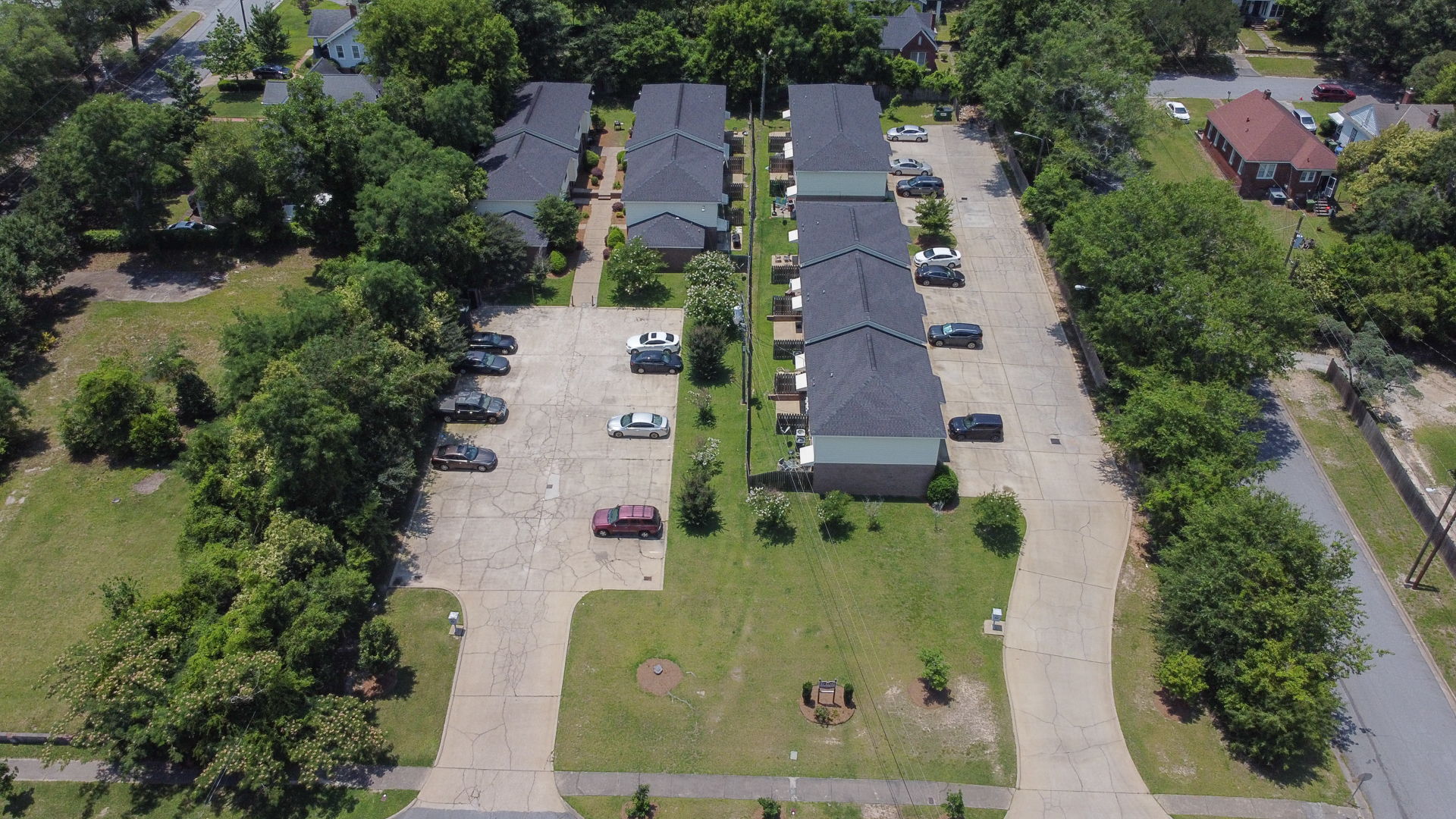
The Small-Building Window: Why Columbus Multifamily (5–20 Units) Is the 2026 Correction's Best Deal
There's a quiet correction happening in Columbus that most investors aren't watching. It isn't in the single-family listings — we've written about that market's sales-side squeeze already, with homes running roughly 60 days on market and frequently closing below asking. It's in the small apartment buildings: the 5-to-20-unit properties bought at 2021-2024 peak prices, often on short-term or floating-rate debt, that now have to face 2026's refinancing math.
Some of those owners are marketing buildings below what they paid. Listings are sitting on commercial marketplaces for months. Portfolio sellers are offering several buildings at once — a classic sign of a position being exited, not a property. And almost nobody is bidding, because the 5-20 unit segment is too big for first-time house-hackers and too small for the institutions.
That gap is the window. For the individual investor with the discipline to underwrite honestly and the patience to make offers at their own number, small multifamily in Columbus right now offers something rare: motivated sellers, thin competition, and — because of Fort Benning — a tenant demand floor that most correction markets simply don't have.
This article is the method: why the window exists, how to screen for candidates, the per-door underwriting that separates real deals from disguised problems, and how the military tenant pipeline changes the rent side of the math.
Why Small Multifamily Corrects Differently
The 2021-2024 vintage problem. During the cheap-money years, small apartment buildings traded at peak prices on pro formas that assumed rent growth forever — and, critically, often on debt that wasn't fixed for thirty years. Commercial and DSCR loans on small multifamily commonly carry five- to ten-year terms, floating rates, or balloon maturities. As those notes mature or reset, the building's actual NOI meets today's cost of capital, and some owners are discovering the building is worth less than their basis. We've published the same physics at single-family scale — a 2021 note versus a 2024 note on the identical asset is the difference between positive and negative cash flow. On a ten-unit building, multiply the gap by ten. For an owner facing that reset, exiting at a loss can rationally beat feeding a negative-leverage building every month.
The liquidity gap. Below roughly five units, residential financing keeps bids alive — FHA loans, house-hackers, first-time investors with conventional 30-year money. Above roughly fifty units, syndicators and institutions with committed capital hunt deals at scale. The 5-20 unit middle has neither. The buyer pool is local, small, thinly capitalized, and slow. Price discovery that takes a weekend in the starter-home market takes two quarters here — which is exactly the environment where a prepared buyer extracts a discount.
What the tape shows. As of late August, the two major commercial marketplaces show roughly a dozen active multifamily listings in the Columbus market. Read the listing copy the way we read Zillow history in the single-family version of this method, and the motivation markers are sitting in plain sight: value-add language leaning on future earning power rather than current performance, sellers marketing multiple buildings together, and proof-of-funds requirements that signal owners done entertaining tourists. Extended market time and price reductions from initial ask complete the pattern. None of this is hidden. It's published, on platforms with free search, mislabeled with last cycle's prices.
The Columbus Edge: A Demand Floor Named Fort Benning
Here's the section only a Columbus operator can write, because it's the difference between buying a correction and catching a falling knife.
In most correcting markets, a small apartment building carries genuine demand risk — if the local employer wobbles, the rent roll wobbles with it. Columbus multifamily carries something different: demand seasonality, anchored by an installation that regenerates the tenant pool on a federal schedule.
The demand lives off-base. In our survey of 80 military families, 90 percent lived off-base — and 8 of those 80 specifically in off-base apartments. The installation doesn't house its own demand; the surrounding market does, including its apartment stock.
BAH creates a published rent ladder. Basic Allowance for Housing bands by rank function as a natural rent tier for every unit type in a building. Single soldiers and junior enlisted fill one-bedroom and smaller two-bedroom units at the lower bands; E-5 through E-7 families anchor larger units near the $1,716-$2,004 band (2026 rates with dependents). A well-positioned small building rents every unit type into a known, government-published pay scale. Almost no other market in America gives a landlord that kind of revenue visibility — it's the closest thing to underwriting against a rate card that residential real estate offers.
The vacancy is a calendar, not a mystery. Half of all PCS moves land in June through August, in-season units lease in roughly 21 days versus roughly 41 off-season — and unlike a single-family owner with one lease to time, a small-building owner can engineer lease end dates unit by unit, staggering the rent roll into the season across two or three cycles until the whole building turns inside the demand window.
The honest balance: military demand is a floor, not a guarantee. Screening discipline, property condition, and location quality still decide whether a specific building captures the pipeline. A poorly run building next to a well-run one stays empty in the same market.
The Per-Door Method
The underwriting framework, carried through one illustrative composite. To be explicit: the building below is illustrative — round numbers, a composite of the segment, matching no live Columbus listing.
1. Screen on price-per-door; decide on NOI. Per-door pricing normalizes buildings of different sizes instantly, which makes it the right screening metric — and a dangerous valuation metric. Two $78,000-per-door buildings can have wildly different economics depending on unit mix, condition, and what's deferred. Per-door gets a building onto your list. Only NOI gets it an offer.
2. Rebuild the rent roll from reality. Actual leases, actual collections, actual deposits — then market rents per unit type checked against the BAH ladder. Never the offering memo's "post-renovation projected rents." If the pro forma needs renovations to be true, you're being asked to pay today for income that requires your own capital to exist.
3. Underwrite expenses at 45-55 percent of gross for older small multifamily — not the 35 percent the offering memo shows. The honest stack: management, economic vacancy (collections drift and concessions, not just empty units), maintenance on 1960s-80s vintage systems, funded reserves, insurance quoted rather than guessed, and — the trap that scales brutally with building price — property taxes at your reassessed basis, not the seller's old bill. A long-held building's frozen assessment can double or triple on sale, and on a $700,000 transaction that's not a rounding error; it's a four-figure annual line the memo forgot.
4. Price the capex schedule before you price the building. Most Columbus small multifamily is 1960s-80s construction. Roofs, plumbing stacks, electrical panels, HVAC fleets, parking surfaces — on a fifty-year-old building these are scheduled liabilities, not surprises. A building priced $15,000 per door below its competition while carrying $20,000 per door of deferred systems isn't a discount. It's a prepayment, with interest, on someone else's deferred maintenance.
5. Reverse-engineer the price from your hurdle rate. Conservative NOI, your required return, today's actual commercial or DSCR debt terms — solve for the maximum price where the building clears your number. That output, not the asking price, is the offer. The single-family version of this discipline closed 17 percent below list last month; the multifamily version works identically, with one addition covered in the table below.
The illustrative composite — a 10-unit, 1975-vintage Columbus building:
| At the ask | At the underwritten price | |
|---|---|---|
| Price | $780,000 | $550,000 |
| Per door | $78,000 | $55,000 |
| Honest NOI (50% expenses, 8% economic vacancy) | $52,000 | $52,000 |
| Loan (75% LTV, 7.5%, 25-yr) | $585,000 | $412,500 |
| Annual debt service | ~$51,900 | ~$36,600 |
| Cash flow | ~$0 | ~$15,400 |
| DSCR | 1.00 | 1.42 |
| Cash-on-cash | ~0% | ~10% |
Illustrative composite — not a specific property. Memo pro forma at 35% expenses would show NOI near $68,000, flattering the ask; the honest stack is what the table uses.
Notice what fails first at the asking price. Not your hurdle rate — the lender's. Commercial and DSCR lenders require debt service coverage around 1.20 to 1.25; the ask produces 1.00. At $780,000, honest NOI cannot support the loan the price requires, which means the asking price isn't just a bad deal — it's frequently an unfinanceable one, and every month it sits on the market, the seller's broker is learning that from other buyers' lenders. Your underwritten offer isn't an insult. It's the first number the seller has received that a bank will actually fund.
Yes, the gap in the table is large — roughly 29 percent below ask. In a normal market that offer goes straight to the trash. In this segment, in this correction, the seller's alternative to your financeable number is another quarter of negative leverage on a building the last three buyers couldn't finance at all. Most will still say no. The method only needs the one whose refinance date says yes.
Making the Offer
The offer discipline is the same playbook we published for houses, compressed here to the multifamily specifics.
Offer the underwritten number without apology, and let the structure carry the credibility: a lender letter or proof of funds attached, a realistic close date, and targeted contingencies — inspection scoped to the systems on the capex schedule (roof, stacks, panels, HVAC fleet) rather than an open-ended due-diligence window. To a seller who has watched buyers wander off during ninety-day diligence periods, tight scope reads as certainty, and certainty is currency.
Negotiate inspection findings surgically. The capex schedule you built in Step 4 is the negotiation — when the inspection confirms a line on it, the ask is that line, evidenced and scoped, not a thirty-item punch list. In this segment the discount was won at the offer; the inspection protects it. Re-trading a tired seller is how financeable deals die out of spite.
And expect nos. The candidate universe here is a dozen listings, not a thousand — this is a patience game across a small field, where cumulative market time does the persuading for you, one quarter of carrying costs at a time.
The Operations Reality
One building is ten leases, ten turns, ten sets of tenant dynamics, one roof, and shared systems that single-family owners never touch. The buildings that fail in this segment usually fail here — not at the purchase price. Turns that miss PCS season and sit forty days each. Collections that drift two percent a year. Vintage systems maintained reactively until the capex schedule stops being a schedule and becomes an emergency.
What disciplined operation looks like is unglamorous and completely knowable: per-unit performance tracking against the seven numbers, lease end dates engineered into the season unit by unit, rents set per unit type against the BAH band rather than against last year's number, and preventive maintenance run against the systems' actual ages.
Buying at the right per-door price is the margin. Operating discipline is whether you keep it.
What to Do Next
If you're evaluating a small multifamily building in the Columbus market — or you own one and the math in this article felt uncomfortably familiar — send us the address and rent roll. We'll run the per-door analysis, the BAH-ladder rent check, and the honest expense stack, free.
Request it at https://www.5pre.com/columbus-property-management, or book a discovery call: https://calendly.com/5pp/fpp-discovery
Veteran-owned. We underwrite Columbus multifamily with the same math we publish.
Frequently Asked Questions
Is 2026 a good time to buy a small apartment building in Columbus, GA?
For prepared buyers, the conditions are unusually favorable: owners who bought at 2021-2024 peak pricing are meeting today's refinancing math, market time is stretching on commercial listings, and the 5-20 unit segment has a structurally thin buyer pool — too big for house-hackers, too small for institutions. The opportunity belongs to investors who underwrite honestly and offer at their own number rather than the asking price.
What is a good price per door for multifamily in Columbus?
Price-per-door is a screening metric, not a valuation — the right answer depends on the building's actual NOI, condition, and unit mix. The disciplined approach: rebuild the rent roll from actual leases, underwrite expenses at 45-55 percent of gross for older buildings, include capex for 1960s-80s vintage systems and taxes at your reassessed basis, then reverse-engineer the maximum price from your required return. That output — not a rule-of-thumb per-door number — is what you can pay.
Why is the 5-20 unit segment less competitive than houses or large complexes?
Financing and buyer pools. Below roughly five units, residential loans and house-hackers keep demand deep. Above roughly fifty units, institutional capital hunts deals at scale. The middle requires commercial financing, real operating capability, and local knowledge — so fewer buyers compete, price discovery is slower, and motivated sellers have fewer exits. In a correction, that gap widens in the buyer's favor.
How does Fort Benning affect multifamily investing in Columbus?
It creates a demand floor. Ninety percent of military families live off-base per our survey, and BAH housing allowances create published rent bands by rank — a natural rent ladder across a building's unit mix, from junior-enlisted one-bedrooms to family-sized units near the E-6/E-7 band. PCS cycles also make vacancy seasonal and plannable: about half of moves land June through August, so lease end dates can be engineered into peak demand unit by unit.
What expenses do new multifamily investors underestimate?
Three consistently: real operating expenses (older small buildings run 45-55 percent of gross, not the 35 percent in offering memos), property-tax reassessment at the new purchase price (the seller's old tax bill is not your tax bill), and capital expenditures on vintage systems — roofs, plumbing stacks, electrical panels, and HVAC fleets on 1960s-80s construction are scheduled liabilities, not surprises.
Should I self-manage a small apartment building?
Only with real capacity. A ten-unit building is ten leases, ten turnovers, shared systems, and collections discipline — and in Columbus, capturing the military tenant pipeline means running leasing on the PCS calendar with BAH-anchored pricing per unit type. Most acquisition wins in this segment are lost operationally; professional management is frequently the difference between the underwritten return and the actual one.
