
If you're reading this with water in your house, here's the short version: you're going to get through a process that has a defined sequence, and knowing the sequence is most of the battle. This guide walks through every step — from the first hour to the final repair payment — including the parts most people don't find out until it's too late: whether your policy actually covers this kind of water, the difference between two payout methods that can change your check by thousands of dollars, what water mitigation companies do and don't do, and why your mortgage company ends up holding your insurance money.
We manage rental properties and have walked this process with owners many times. What follows is the plain-language version of how it actually works.
The First 24 Hours: Safety, Documentation, Filing
The first three moves are: make it safe, document everything, then file the claim — in that order.
Safety first. If water is still coming in from a plumbing source, shut off the water main if you can reach it safely. If water is near outlets, appliances, or your electrical panel, shut off power at the breaker — but only if you can do it without standing in water. If you can't do either safely, don't; wait for help.
Document before you clean anything. Photograph and video everything — wide shots of each room, close-ups of damaged materials and belongings, the water line on the walls, the source if you can see it. Your claim will be built on this evidence, and the condition of the house before cleanup is the condition the insurer needs to see. You can (and should) take reasonable steps to prevent further damage — moving undamaged belongings, stopping the source — but document as you go.
File the claim. By phone or through the insurer's app or website — both are normal, and neither is faster in any way that matters. You'll get a claim number and, soon after, an assigned adjuster. Write down the claim number somewhere you won't lose it; every conversation from here forward references it.
Before Anything Else: Find Out What Your Policy Actually Covers
The single most important question in a water claim is where the water came from — because "flood" and "water damage" are different coverages, on different policies, and many homeowners only discover the difference after the loss.
Here is the distinction, plainly:
Water from outside, rising or flowing in — rivers or creeks overflowing, storm surge, heavy-rain runoff, surface water entering at ground level — is "flood" in insurance terms, and standard homeowners and landlord policies do not cover it. Flood coverage is a separate policy, purchased either through the National Flood Insurance Program (NFIP, run by FEMA) or a private flood insurer. If you don't have a flood policy and the water rose in from outside, that's the hard conversation to have with your agent on day one — and note for the future that NFIP policies carry a 30-day waiting period, so flood coverage can't be bought when a storm is already on the map.
Water from inside, sudden and accidental — a burst pipe, a failed water heater or appliance, rain entering through a roof opening a storm just created — is "water damage," and it's typically covered by a standard homeowners or landlord policy. The key words are sudden and accidental: slow leaks and long-term seepage the insurer judges to be neglected maintenance are generally not covered.
And one exclusion that surprises almost everyone: sewer and drain backup is typically excluded from both the standard policy and flood coverage unless you bought a specific backup endorsement. Check your declarations page.
So pull your actual policy — the app usually has it, or your agent can email it within minutes — and find three things: your deductible, the type of water event covered, and the coverage sections below that apply to your situation.
If it's your home: Loss of Use / Additional Living Expenses
If a covered loss makes your home uninhabitable, your homeowners policy's Loss of Use coverage (usually listed as Coverage D) pays the extra costs of living somewhere else — and that's the budget for your temporary housing. It covers costs above your normal spending: lodging, meals beyond your usual grocery bill, extra commuting. The limit is typically 10 to 30 percent of your dwelling coverage. One important caveat if your loss is a true flood claim: standard NFIP flood policies do not include Loss of Use — temporary housing comes out of pocket unless a private flood policy adds it.
If it's your rental: Loss of Rents / Fair Rental Value
If you're a landlord, the equivalent coverage on your landlord (dwelling) policy is Fair Rental Value — commonly called Loss of Rents — and it replaces the rental income while the unit is uninhabitable for a covered repair. It's typically capped around 20 percent of your dwelling coverage limit and pays based on what the unit was actually renting for. This is income replacement for you as the owner; your tenant's own temporary housing and damaged belongings are covered by the tenant's renters policy, which is why renters insurance requirements exist in leases. (You may hear this coverage called a "business loss" policy in conversation — the standard terms on the policy itself are Fair Rental Value or Loss of Rents.)
RCV vs. ACV: the difference that decides the size of your check
Your policy pays claims one of two ways, and the difference is worth understanding before you talk numbers with anyone.
Actual Cash Value (ACV) pays what the damaged property was worth at the moment of loss — replacement cost minus depreciation for age and wear. An ACV settlement is the smaller check.
Replacement Cost Value (RCV) pays what it actually costs to repair or replace the damage with similar new materials, with no depreciation deducted — the larger total payout. But RCV claims are typically paid in two disbursements: the insurer first pays the ACV amount, and holds back the difference — called recoverable depreciation — until you complete the repairs and submit proof (invoices, receipts, or a completion certificate). Then the second check releases.
A concrete example: say flood-driven roof damage requires a $20,000 roof replacement, and the insurer calculates $8,000 of depreciation on your 10-year-old roof. Under ACV, you receive $12,000 minus your deductible — done. Under RCV, you receive that same first check, complete the roof, submit the invoice, and receive the remaining $8,000. Same event, $8,000 difference — but only if you finish the work and file for the holdback. Two practical notes: your policy sets a deadline for claiming recoverable depreciation (check it and calendar it), and the second payment reimburses what you actually spent — unspent estimate dollars don't get released.
The public adjuster decision
A public adjuster is a licensed professional who represents you — not the insurer — in documenting and negotiating the claim, for a contingency fee typically in the 10 to 20 percent range of the settlement. Whether that's worth it is a genuine cost-benefit call, not a default. If your adjuster is responsive, the scope is straightforward, and the insurer's estimate tracks with your contractor bids, you may not need one. If the claim is large, the damage is complex, or the insurer's number sits far below real repair costs, a public adjuster can more than earn the fee. Two things to know before signing: the fee comes out of your settlement (the NAIC is explicit that the policyholder pays it), and fee caps vary by state — Georgia's allowable cap is among the highest in the country, so read the percentage in the contract rather than assuming the typical range, and verify the adjuster's license with the state insurance department.
The Water Mitigation Company: What They Do, What They Don't, and What to Sign When
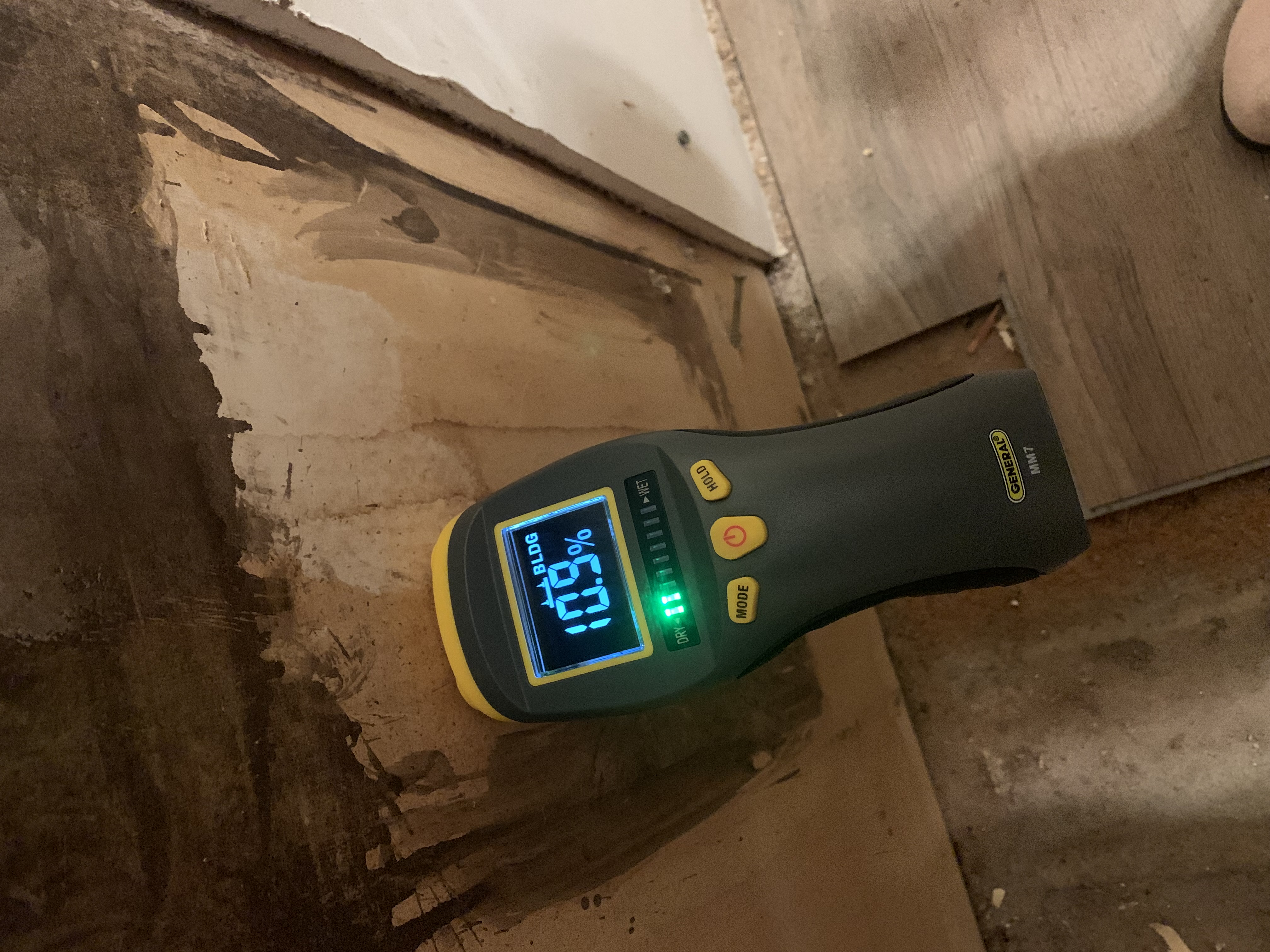
Water mitigation companies — ServPro, Legion, and similar firms — perform emergency stabilization: they stop active water, remove wet materials, set drying equipment, take moisture readings, and produce documentation. They do not perform repairs. Understanding that boundary, before one is standing in your kitchen, prevents most of the problems people have with this stage.
What mitigation actually includes: extracting standing water, cutting out saturated drywall and flooring ("demo"), placing industrial dryers and dehumidifiers, monitoring moisture levels over several days, and generating the moisture reports your claim file needs. All of that is real, necessary work — fast drying is what stands between a water loss and a mold problem.
What it doesn't include: putting your house back. The drywall, flooring, cabinets, and paint are a separate phase, performed by a licensed contractor or restoration company you choose, on estimates you approve. When the mitigation crew finishes, your house will be dry, clean, and opened up — not repaired. Knowing that in advance keeps the moment from being a shock.
Two protective points, stated plainly:
First, mitigation firms bill the work to your claim, and their revenue scales with the scope of the work performed — so scope decisions deserve your attention. Most firms do honest work. But "how much gets demoed and how long the equipment runs" is a judgment call being made by the party billing for it, which is reason enough to stay engaged: ask what's being removed and why, and confirm your insurer's adjuster is aligned on scope as the work proceeds.
Second — and this is the sentence to remember from this whole section — do not sign a direction-to-pay or assignment-of-benefits (AOB) document until your insurance company has authorized the work, or until you fully understand what the document transfers. A direction-to-pay routes your claim money straight to the vendor; an assignment of benefits can hand over your rights under the claim itself. Signed in a hallway on the worst night of your year, either can commit you to costs your insurer hasn't agreed to cover. The professional, reasonable move — and reputable firms will not object — is: "I want my insurer's authorization first." Emergency stabilization to prevent further damage is standard and expected; open-ended scope on your signature is not.
Temporary Housing While Repairs Happen
Drying takes days; repairs take weeks to months; and if the home isn't livable, your Loss of Use coverage (or your own budget, on an NFIP claim) funds somewhere to stay — which is a housing problem with a specific shape: furnished, immediate, flexible length. Nobody knows on day three whether repairs will take six weeks or fourteen, which is exactly the timeline a furnished short-term rental is built for — equipped kitchens, real bedrooms, no lease term to guess at, extend as the repair schedule moves. If you're in the Columbus area, our furnished short-term rental inventory exists for precisely this situation; wherever you are, keep receipts for every housing and meal cost above your normal spending, because that's what Loss of Use reimburses.
Getting the Work Done and Getting Paid
The repair phase runs: estimates → insurer approval → payment (through your mortgage company, if you have one) → contractor schedule → work → final inspection. The mortgage step is the one nobody expects, so it gets the full explanation below.
Get two to three repair estimates from licensed contractors. Not from the mitigation company — repairs are a different trade and a separate decision. Comparable written estimates give you a market-tested number, and if the insurer's estimate comes in materially below all of them, the gap itself is your negotiation exhibit.
Submit the estimates to your adjuster and get scope agreement in writing before work starts. Supplements — legitimate additional damage discovered mid-repair — are normal, but they go through the same approval loop, so surface them immediately rather than at final invoice.
Now, the payment step — read this twice if your property has a mortgage. If the property is financed, the insurance check for structural repairs will typically be made out to both you and your mortgage company, because the lender has a legal interest in the property being restored. You can't just deposit it. The check goes to your servicer's loss-draft department, which deposits the funds in a restricted account and releases them in installments (draws) as the work is verified — commonly an initial disbursement to start, a draw mid-project, and a final payment. For the final release, the mortgage company typically sends its own inspector to confirm the work is complete before the last dollars move. Call your servicer's loss-draft department early — the phone number is on your mortgage statement — get their exact document checklist, and start it in parallel with everything else, because their timeline runs on top of the insurer's, not inside it.
Arrange the contractor's payment schedule around the draws — up front. A contractor expecting a cash job's rhythm (deposit, progress payment, final) will be frustrated by insurance-funded timing unless it's planned. The honest framing at hiring: "This is an insurance-funded repair with a lender loss-draft process — payments come in verified draws." Experienced restoration contractors know exactly what that means and will structure around it; a contractor who won't is telling you something useful.
Keep your adjuster updated as work proceeds, document the finished product the same way you documented the damage, and if your policy is RCV — submit the completion proof and claim your recoverable depreciation. That last check is yours; it just has to be asked for.
Two Things That Make the Whole Process Smoother
If you own rental property, ask your agent about naming your property manager as an additional insured or additional interest on the landlord policy. It authorizes the manager to communicate with the insurer and coordinate the claim when you're not available — which, for a deployed service member, an out-of-state owner, or anyone who'd rather not run a claim from three time zones away, converts the entire process above into something that happens for you rather than to you.
And set the payment-timeline expectation with everyone, on day one. Insurance-funded repairs move at the speed of adjuster approvals and lender draws — genuinely slower than cash work, especially with a mortgage in the loop. Contractors who plan for draws stay happy; sellers of your patience who expected a lump sum do not. Saying it out loud at the start costs nothing and prevents the most common conflict in the entire process.
If You Need a Place to Stay
If your Columbus-area property needs repairs and you need somewhere comfortable to stay in the meantime, we manage a portfolio of furnished short-term rentals built for exactly this — flexible stays, fully equipped, no long-term commitment. Browse available properties at https://www.5pre.com/short-term-rentals.
Veteran-owned. We've been through this process with owners more times than we'd like — happy to answer questions even if you never book with us.
Frequently Asked Questions
What's the difference between RCV and ACV on an insurance claim?
Actual Cash Value (ACV) pays the depreciated value of the damaged property at the time of loss — replacement cost minus depreciation for age and wear — which produces a smaller payout. Replacement Cost Value (RCV) pays the full cost to repair or replace with similar new materials, with no depreciation deducted, producing a larger total payout — but typically in two disbursements: an initial check for the ACV amount, then the withheld "recoverable depreciation" released after you complete repairs and submit proof, such as invoices or a completion certificate. Policies set deadlines for claiming the holdback, so check yours.
Does homeowners insurance cover flood damage?
Generally no. Standard homeowners and landlord policies exclude flood — water rising or flowing in from outside, such as overflowing rivers, storm surge, or heavy-rain surface runoff. Covering that requires a separate flood policy through the National Flood Insurance Program (NFIP) or a private flood insurer, and NFIP policies carry a 30-day waiting period. Sudden, accidental water damage from an internal source — like a burst pipe or failed appliance — is typically covered by the standard policy. Sewer or drain backup is usually excluded from both unless you purchased a specific endorsement.
What does a water mitigation company like ServPro actually do?
Emergency stabilization, not repair. Mitigation companies stop active water, extract standing water, remove saturated materials such as drywall and flooring, set commercial drying equipment, take moisture readings, and produce documentation for the claim. When they finish, the home is dry and opened up — the rebuild (new drywall, flooring, paint, cabinets) is a separate phase performed by a licensed contractor you select from your own estimates.
Should I sign paperwork from a water mitigation company before my insurance approves it?
No — not a direction-to-pay or an assignment-of-benefits (AOB) document. A direction-to-pay routes your claim funds directly to the vendor, and an AOB can transfer your rights under the claim itself. Wait until your insurer has authorized the work, or until you fully understand exactly what the document commits you to. Emergency work to prevent further damage is standard; open-ended billing authority signed under stress is what this protects you from. Reputable firms will not object to "I want my insurer's authorization first."
Why does my mortgage company need to be involved in my insurance check?
Because the lender has a legal interest in the property being restored, insurance checks for structural repairs on a financed home are typically made payable to both you and the mortgage company. The check is processed by the servicer's loss-draft department, which holds the funds and releases them in installments as repair work is verified — often including the lender's own inspection before the final disbursement. This adds real time to the payment process, so contact the loss-draft department early and get their document checklist started in parallel.
How long does a flood or water damage insurance claim take to pay out?
Longer than most people expect, especially with a mortgage involved. Drying takes days; adjuster inspection, estimates, and scope agreement take weeks; and on a financed property, the lender's loss-draft process releases money in verified draws rather than one lump sum, with a final inspection before the last payment. RCV policies add a final step: recoverable depreciation is released only after completed repairs are documented. Setting draw-based payment expectations with your contractor up front prevents most of the friction.
What is Loss of Rents / Loss of Use coverage?
They're parallel coverages on different policy types. On a landlord (dwelling) policy, Fair Rental Value — commonly called Loss of Rents — replaces the rental income while a covered loss makes the unit uninhabitable, typically capped around 20 percent of dwelling coverage. On a homeowners policy, Coverage D — Loss of Use / Additional Living Expenses — pays the owner-occupant's own extra costs of living elsewhere during covered repairs, typically 10 to 30 percent of dwelling coverage. A displaced tenant's own housing and belongings are covered by the tenant's renters policy. Whichever applies to you, that coverage is the budget for temporary furnished housing.
Sources
- FEMA — National Flood Insurance Program overview (flood exclusion from standard homeowners policies; NFIP structure)
- FEMA / FloodSmart — NFIP flood definition and coverage boundaries (external flood vs. internal water damage)
- North Carolina Department of Insurance — Actual Cash Value vs. Replacement Cost Value consumer guide (two-payment recoverable depreciation mechanic)
- New York Department of Financial Services — replacement cost and actual cash value opinion (definitions)
- Insurance Information Institute (III) — actual cash value and replacement cost definitions; water damage claim frequency
- National Association of Insurance Commissioners (NAIC) — consumer guidance on public adjusters (policyholder pays the fee) and home insurance
- IRMI (International Risk Management Institute) — Fair Rental Value coverage definition (dwelling policy Coverage D vs. homeowners ALE)
- State insurance department consumer guides and insurance-education sources on public adjuster contingency fees and state caps, including Georgia's
