
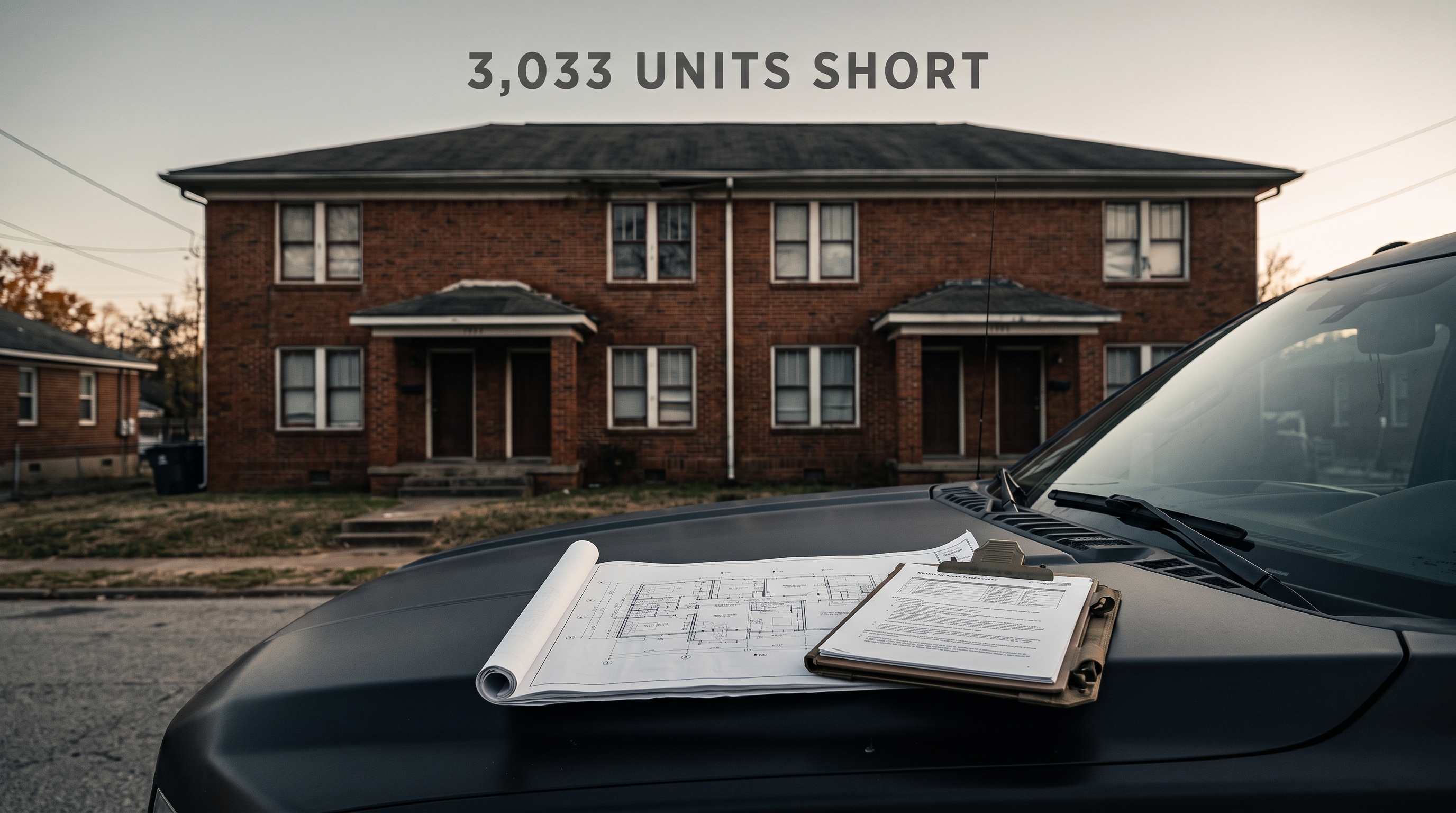
3,033 Units Short: The Logistics of Winning the Columbus Missing Middle War
The Georgia Tech Columbus Regional Housing Study just dropped, and if you’re an institutional investor or a "Missing Middle" asset owner, it’s the closest thing to a tactical briefing you’re going to get.
The summary? We are under siege. Muscogee County is currently staring down a massive housing shortfall. To keep the local economy from stalling and to house the workforce that keeps the lights on, we need 3,033 new residential units over the next decade. That is an annual logistical requirement of 303 units—a target we are currently missing with impressive consistency.
In the military, we have a saying: “Amateurs study strategy; professionals study logistics.” Right now, the logistics of Columbus workforce housing are being handled by amateurs, and your Net Operating Income (NOI) is the casualty.
The Data: Demand is High, Efficiency is Low
The demand signal isn’t coming from speculative bubbles; it’s coming from the ground. Median rents in Muscogee are holding at $1,072, while Chattahoochee is commanding $1,235. This strength is anchored by the permanent operational requirement of Fort Benning.
Incoming military families and the "Missing Middle" workforce (teachers, first responders, logistics pros) aren't looking for $3,000-a-month luxury "lifestyle" boxes. They need clean, functional, secure workforce housing—the duplexes, quadplexes, and 20-unit vintage brick buildings that define the Columbus landscape.
The GT study makes it clear: the solution to this crisis isn’t a forest of massive, five-over-one apartment blocks. The solution is the preservation and stabilization of existing Missing Middle assets.
The Problem: Your Manager is an "Asset Tax"
If you own a 12-unit building in Columbus from 3,000 miles away, you are likely suffering from a "Mom and Pop" management infection.
Most local operators treat older workforce housing as a high-margin repair business. They see a Class C+ asset and see a "Contractor Tax" opportunity. Every time a toilet clogs or a HVAC capacitor blows, they aren't just fixing the problem—they are marking up the invoice 20%, 30%, or 50% before it hits your desk.
They are bleeding your NOI dry under the guise of "maintenance," while the property continues to degrade. This is how "workforce housing" turns into "slumlord housing." It’s a lack of operational discipline that destroys capital and drives the housing shortfall further.
Hope is not a management strategy.
The Fix: Military-Grade Operational Infrastructure
At Fifth Principle Properties, we don't do "feel-good" management. We provide the operational infrastructure to protect your yield and keep workforce units online.
We treat the Missing Middle with institutional-grade discipline:
Zero-Markup Maintenance: We pass the raw vendor invoice directly to you. We don’t profit from your property breaking. If the plumber charges $150, you pay $150. Our incentive is to keep the asset running, not to farm your repairs for extra fees.
Preventative Logistics: We treat unit turns and inspections like a pre-combat check. We identify failure points before they become 2:00 AM emergency calls.
Market Alignment: We understand the Fort Benning PCS cycles better than anyone. We align your lease-ups with the surge of demand to ensure your vacancy stays in the single digits.
Stabilizing workforce housing isn't just about collecting rent; it's about preserving the "Missing Middle" so the city can meet that 3,033-unit shortfall.
The Call to Action: Stop the Bleeding
Is your 8-unit building in Midtown underperforming? Are your maintenance costs magically equal to 40% of your gross revenue?
You’re being farmed.
Fifth Principle Properties is offering a Free Rent Roll & Expense Audit. We will take a tactical look at your P&L, identify where your current manager is upcharging you, and show you exactly how much NOI you are leaving on the table.
Logistics wins wars. It’s time to fix yours.
