
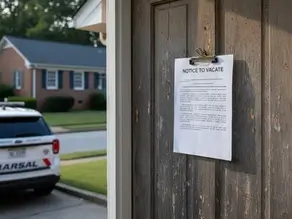
What Muscogee County landlords should actually expect (and how to avoid this mess)
LEGAL DISCLAIMER: Fifth Principle Properties is a property management firm, not a law firm. This guide is general information, not legal advice. Court procedures and fees can change. For case-specific guidance, consult a Georgia landlord-tenant attorney or the appropriate clerk’s office.
The uncomfortable truth: evictions are slow because the system is slow
If you’re reading this because a tenant isn’t paying, you probably want the fast version.
Here it is:
Evictions don’t start when rent is late. They start when you issue proper
notice and document it.
Even after you “win,” you don’t get the home back that day. There are waiting periods and scheduling delays.
The biggest cost usually isn’t court fees. It’s the vacancy, the cleaning, and the turn.
Realistic timeline ranges in 2026 (typical)
Best case (tenant doesn’t answer): ~3–5 weeks
More common (tenant answers + hearing): ~6–9 weeks
Complicated cases: 9+ weeks
Before we talk timelines, here’s the vocabulary in human terms
You’ll see these words everywhere, so let’s translate them:
Notice / Demand for Possession: Your written “pay or leave” demand.
Dispossessory filing: The court case that begins eviction.
Service: Official delivery of papers to the tenant.
Answer: Tenant’s formal response (if they answer, you usually get a hearing).
Default judgment: Tenant doesn’t answer → you can request judgment.
Writ of Possession: The order that allows law enforcement to schedule the lockout/set-out.
What the eviction journey looks like in real life (Muscogee County)
Instead of a rigid “Day 1, Day 2” flowchart, think of eviction as four phases.
Phase 1: The notice phase (you set the tone here)
You generally shouldn’t file the moment rent is late. For nonpayment, Georgia landlords commonly use a short pay-or-vacate notice window (often referenced as 3 days). Your lease may also set a grace period.
In our leases, rent is due on the 1st of the month. Tenants are extended a three-day grace period, so rent is considered late on the 4th day. Our property management system also notifies tenants automatically once rent is deemed “late.”
What matters most: proof.Judges don’t want “I texted them.” They want documentation. If you text or email, print the communication thread. The goal is to show the judge that you requested payment and that the communication is timestamped.
Do this like a grown-up:
Written notice
Keep a copy
Document delivery (door posting + email/text copy + certified mail if you want extra backup)
If you skip this step or do it sloppily, your “quick eviction” becomes “restart from scratch.”
Phase 2: Filing + service (where the clock starts moving… slowly)
Once notice is done, you file a dispossessory case. In Columbus/Muscogee, people assume everything goes through “Magistrate Court,” but local filing procedures can differ from other counties.
This typically needs to be completed in person at the Government Center (or online, if available/eligible).
Filing location:Address: 100 10th St, Government Center, Columbus, GA 31901
Location: 8th Floor
Cost: $75 (cash only if completed in person)
Pro tips (that actually matter)
Name everyone: List every adult tenant on the lease, and add “and all other occupants.” If law enforcement arrives, the case details matter.
Decide your strategy early: Accepting money after you start the legal process can jeopardize or delay your case (depending on timing and how it’s handled). Decide whether you’re pursuing payment, possession, or both.
If your goal is eviction, don’t casually accept partial payments without understanding the impact on your case.
After filing, service begins (official delivery). This is where timelines get jammed up:
Tenant dodges service
Incorrect names
Wrong address details
Process delays
Important reality: If service ends up being “tack and mail” (posting), you may regain possession, but it can complicate your ability to pursue a clean money judgment in some circumstances. Translation: you might get the house back but not the money.
Phase 3: The answer phase (the fork in the road)
If the tenant doesn’t answer in time, you’re typically on the faster default path.
If you receive a default, you can request the next steps toward possession. In Muscogee County, you’ll coordinate with the clerk’s office on the required paperwork and process.
If needed, submit the signed writ paperwork per the clerk’s instructions and coordinate with:
Writ/eviction payment:
Muscogee County Sheriff’s Office
Attn: Evictions Office
P.O. Box 1338
Columbus, Georgia 31902
Include your case number with payment.
If the tenant answers, you’re typically headed to a court hearing and the timeline stretches. The court will send you a summons/notice of hearing. This is where we recommend speaking with an attorney, especially if the tenant raises defenses or counterclaims.
Most landlord mistakes happen here:
Messy rent ledger
Accepting money at the wrong time
Unclear lease terms
Poor property condition records
Emotional communication that gets screenshot and weaponized
Phase 4: The “you won” phase (the ugliest period)
Even after judgment, there are waiting periods and then a scheduling process for the writ and the actual lockout/set-out.
You’ll need a plan and people lined up:
Locksmith
Labor/trash-out plan
Camera/phone for documentation
Utilities plan
Make-ready plan ready to launch immediately
This part is extremely ugly because the Sheriff allows a short time period to vacate the tenant, remove all items, and change the locks.
Because every extra week after regaining possession is still lost revenue.
The real cost of an eviction in Columbus (what it actually does to your ROI)
Most landlords fixate on court fees because that’s the visible cost. The true cost is usually:
1) Lost rent (the silent killer)
If you’re losing $1,200–$2,000/month and it drags 6–8 weeks, you’ll feel it.
2) Turnover + damage
Typical ranges:
Locksmith/rekey: $150–$300
Trash-out/cleaning: $500–$2,500+
Repairs/make-ready: depends on condition and damage
3) Court + service + writ fees (baseline examples)
Dispossessory filing: $75
Sheriff/writ fee: $25
A realistic all-in range most owners experience
Fast/default case: ~$2,500–$4,000 (mostly vacancy + turn)
Contested/hearing + longer vacancy: ~$4,000–$8,000+
How to avoid eviction (because that’s the actual goal)
Eviction isn’t a “tenant problem.” It’s usually a screening + process problem.
The best prevention is boring and consistent:
Screening
Verify income with deposits, not just paystubs
Call the previous landlord (not just current)
Run eviction history
Rent collection
Clear late policy
Consistent enforcement
Written communication trail
Property condition
Keep maintenance records
Document repairs
Do inspections (even if you’re out of state)
When “cash for keys” is smarter
Sometimes paying someone to leave is cheaper than two more months of vacancy. If you do it, do it in writing, with clear move-out terms, and don’t improvise.
Military / out-of-state owners: you’re at higher risk
If you’re managing remotely, delay is deadly. Owners lose the most money by waiting until they “have time” to handle it.
Also: military status can add compliance layers. Don’t freestyle it. Get competent legal guidance or have a professional manager coordinate properly.
CTA
If you own a rental in Columbus, GA and want to prevent evictions before they happen, Fifth Principle Properties can help with screening, rent enforcement, documentation, and full-service property management.
Get a rent-ready + screening review: link
