
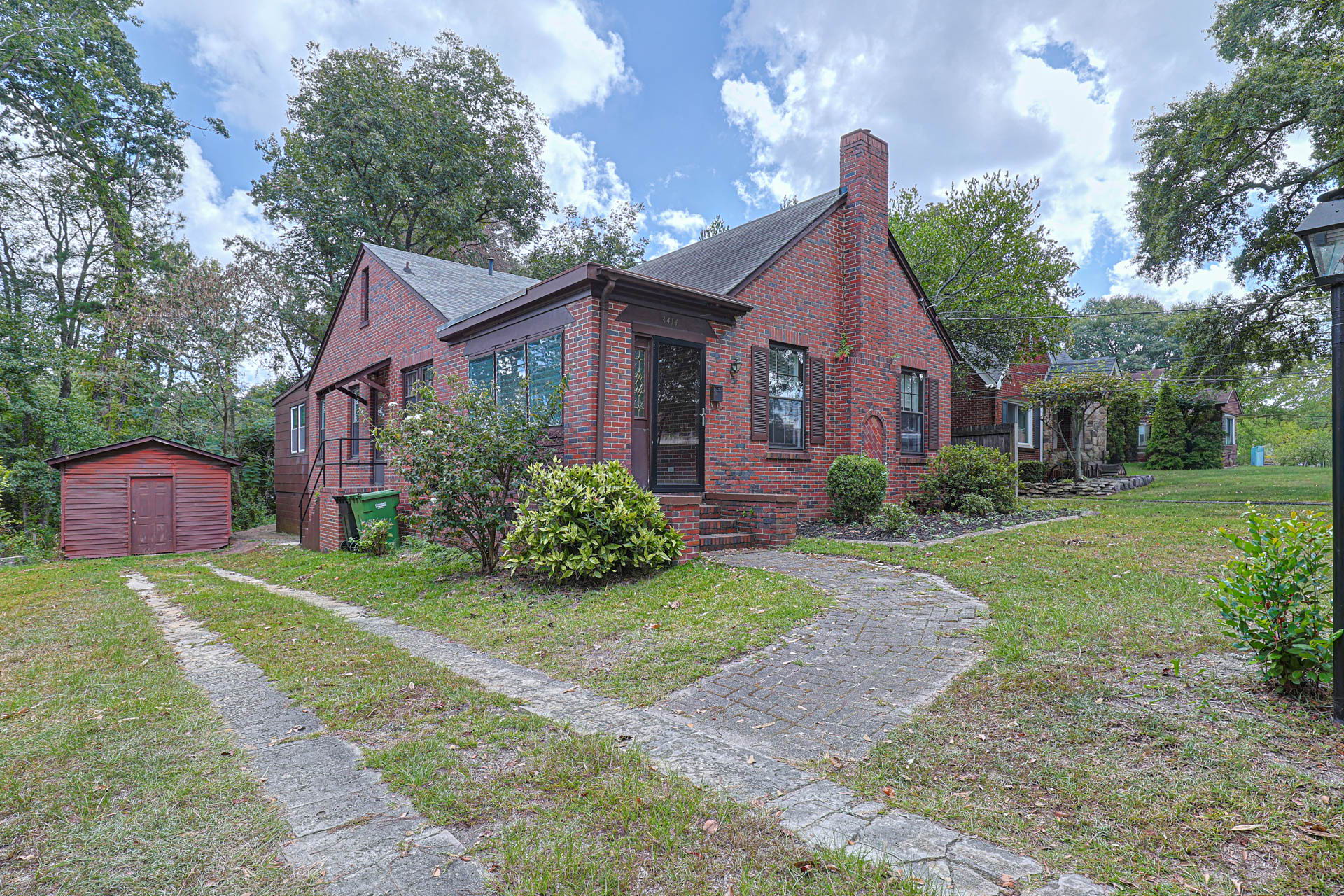
Here is the answer to the question every PCS season brings us: usually, yes — you can keep the home you bought near Fort Benning, rent it out, and buy at your next duty station with a second VA loan, using what's called your remaining entitlement. How much you can borrow with zero down depends on your new county's loan limit and how much entitlement your first loan still ties up; above that ceiling, you bring 25 percent of the difference as a down payment. This guide walks through the math with real numbers, the rules for renting out your VA-financed home, and what the next lender will ask for.
One line before we start: this guide explains how VA entitlement works; your lender will confirm your exact numbers.
We're a veteran-owned property management company in Columbus, and we walk Fort Benning families through this exact decision every cycle. Most of what's written about second-tier entitlement online is either vague or wrong — including, as we found researching this piece, numbers still quoting last year's loan limits. Everything below is checked against VA.gov, the VA Lender's Handbook (Pamphlet 26-7), and the FHFA's 2026 loan limit announcement.
How VA Entitlement Actually Works
Entitlement is not a loan amount — it's the amount VA guarantees to your lender, which is what lets you borrow with nothing down. There are two states to know.
Full entitlement. If you've never used a VA loan, or you've fully restored your entitlement, there is no VA loan limit. Since 2020, VA backs 25 percent of whatever you borrow, as long as you qualify on income and the appraisal supports the price.
Remaining entitlement. The moment you keep an active VA loan — which is exactly what you're doing when you rent out your house — loan limits come back into play for the second loan. Your first loan has "charged" entitlement equal to 25 percent of what you originally borrowed. What's left for the next purchase is based on the conforming loan limit in the county where you're buying, minus what's already charged. VA's own framing: your entitlement, your down payment, or a combination of the two must cover 25 percent of the new loan.
The common myth to kill right now: entitlement does not "reset" when you PCS, and it does not come back when the tenant's rent covers the mortgage. It stays tied up until the loan is gone.
The Math, With Real Fort Benning Numbers
For 2026, the baseline conforming loan limit is $832,750, which means the maximum total guaranty in a standard-cost county — and Muscogee County and most duty-station counties are standard-cost — is 25 percent of that: $208,187.50.
Say you bought near Fort Benning with a $250,000 VA loan, and you have orders. You want to keep the house as a rental and buy a $450,000 home at your next duty station, also a baseline county.
| Step | Amount |
|---|---|
| Entitlement charged by your first loan (25% × $250,000) | $62,500 |
| Maximum guaranty in the new county (25% × $832,750) | $208,187.50 |
| Your remaining entitlement | $145,687.50 |
| Your zero-down ceiling (remaining entitlement × 4) | $582,750 |
| New purchase price | $450,000 |
| Down payment required | $0 |
Because $450,000 sits under your $582,750 ceiling, the VA guaranty fully covers the lender's 25 percent, and you close with nothing down.
What if the next house costs more than your ceiling? Then you bring 25 percent of the gap. On a $650,000 purchase with the same remaining entitlement, the gap is $650,000 minus $582,750, or $67,250 — so the down payment is $16,812.50. Not zero, but a fraction of the 20 percent a conventional loan would want.
Your Certificate of Eligibility shows your charged entitlement; your lender runs this exact calculation for your county. The formula is the same everywhere — only the county limit changes.
Can You Get Your Full Entitlement Back Without Selling?
Keeping the house means keeping the entitlement tied up — with two narrow exceptions. Restoration normally requires both paying the loan in full and disposing of the property, which for most people means selling. The two paths that let you keep the house:
- One-time restoration. If you pay the VA loan in full but keep the home — most commonly by refinancing it into a conventional loan — you can have your entitlement restored once in your lifetime. It's a real strategy when the numbers work: the house becomes a conventionally financed rental, and your full VA benefit comes back for the next purchase. The "one time" is literal; after you use it, future restorations require selling.
- Substitution of entitlement. If you sell to a VA-eligible buyer who assumes your loan and substitutes their own entitlement for yours, yours is restored. This requires the buyer to be both VA-eligible and willing — less common, but worth knowing if your buyer is another service member.
For most families with orders in hand, though, the practical play is the one this guide is about: leave the entitlement where it is and buy with what remains.
The Funding Fee on Your Second VA Loan
The subsequent-use funding fee at zero down is 3.3 percent — noticeably higher than the 2.15 percent first-use fee, and it's the line item PCS budgets most often miss. On the $450,000 example above, that's $14,850, which can be rolled into the loan. The current VA table:
| Down payment | First use | After first use |
|---|---|---|
| Less than 5% | 2.15% | 3.3% |
| 5% or more | 1.5% | 1.5% |
| 10% or more | 1.25% | 1.25% |
Note what the table implies: putting 5 percent down on a subsequent loan cuts the fee from 3.3 to 1.5 percent — on a $450,000 loan, that's roughly $8,000 in fee savings for a $22,500 down payment, a trade worth running with your lender.
You pay no funding fee at all if you receive VA disability compensation, are eligible for it but drawing retirement or active-duty pay instead, are an active-duty Purple Heart recipient, receive DIC as a surviving spouse, or have a proposed or memorandum rating before closing. If that's you, the subsequent-use penalty disappears entirely.
Occupancy: What's Allowed When You PCS
Renting out your VA-financed home after you've lived in it is fully allowed. The occupancy rule works like this: when you buy with a VA loan, you certify that you intend to occupy the home as your residence, generally moving in within 60 days of closing. That intent has to be genuine at closing — buying with a VA loan while planning from day one to use it as a rental is not permitted. But VA sets no published minimum number of months you must stay, and receiving PCS orders after you've made the home your residence is the textbook legitimate reason to convert it to a rental. You do not need VA's permission, and you do not need to refinance. Your spouse or dependent child occupying the home can also satisfy the requirement while you're deployed or stationed elsewhere.
How the Next Lender Treats Your Rental Income
Here is where we found real misinformation worth correcting, because two widely repeated claims conflict — and the VA Lender's Handbook settles it. For the home you're leaving, Pamphlet 26-7 says the prospective rent is used "only to offset the mortgage payment on the rental property" — it cannot be counted as income on top, but it can zero out that PITI payment in your debt-to-income ratio, which is usually all you need. And on the question of reserves, the handbook is explicit: "Reserves are not needed to offset the mortgage payment on the property the Veteran occupies prior to the new loan." No landlord experience is required for this scenario either.
The stricter rules you may have read — 75 percent of rents, six months of reserves, documented landlord experience — are real, but they apply to different scenarios: buying a multi-unit property, or counting income from other rentals you already own. They are not VA's rule for the house you're vacating with orders. One honest caveat: individual lenders can layer their own stricter overlays on top of VA's minimums, so ask your lender which standard they apply.
What the lender will want to see for the offset:
- An executed lease at market rent — and in a strong rental market, some lenders will work with less, but a signed lease makes the file clean
- The security deposit receipt
- Evidence the property won't be difficult to rent
This is the practical argument for lining up your tenant before you close on the next house: a signed lease in hand turns your old mortgage payment into a wash on paper. It's a thing we do for Fort Benning families on a deadline — more below.
Turning Your Home Into a Rental: The Checklist
Three things, in order. First, price it at actual market rent — under-renting to a buddy's buddy costs you at qualification time and every month after; run your numbers through our Rent vs. Sell Calculator before you commit to keeping it at all. Keep-and-rent works when the rent covers principal, interest, taxes, insurance, management, maintenance, and a vacancy allowance — not just the mortgage. Second, convert your homeowners policy to a landlord (dwelling fire) policy effective the day the tenant takes possession; homeowners coverage generally doesn't apply once the home is a rental, and a landlord policy adds loss-of-rents coverage — which, as our flood claims guide and fire claims guide cover in detail, is what keeps the mortgage paid if the house is ever uninhabitable. Third, decide who manages it, honestly: self-managing from Fort Carson or Fort Campbell with no local contact is where most first-time landlord stories go wrong.
Taxes, Briefly
One rule worth knowing before you decide to rent long-term: the capital-gains exclusion on a former primary residence generally requires that you lived in it two of the five years before selling. Service members on qualified official extended duty can suspend that five-year clock for up to ten years — a meaningful advantage unique to the military, detailed in IRS Publication 523. Rental years also bring depreciation and its recapture at sale. We're property managers, not tax advisors: run your situation past a tax professional before the lease is signed.
The Five Mistakes We See Every PCS Season
- Assuming entitlement resets after a PCS — it stays charged until the loan is paid off and, with one lifetime exception, the home is sold.
- Budgeting the first-use funding fee (2.15%) when the subsequent-use fee at zero down is 3.3%.
- Renting below market — it weakens the lender's offset and bleeds cash flow for the life of the lease.
- Leaving the homeowners policy in place after the tenant moves in.
- Self-managing from a thousand miles away with no local contact for the 2 a.m. call.
Orders in Hand?
Orders in hand and not ready to sell? We're a veteran-owned property management team in Columbus that helps Fort Benning families turn their homes into rentals every PCS season, often with the lease signed before you close on the next house. Start with a free rental analysis: https://www.5pre.com/columbus-property-management-military
Veteran-owned. Run by a former Ranger.
Frequently Asked Questions
Can I rent out my house and get another VA loan?
Usually, yes. If you bought your home with a VA loan, lived in it, and now have PCS orders, you can keep it as a rental and buy at your next duty station using your remaining entitlement. Your first loan ties up entitlement equal to 25 percent of its original amount; what's left determines how much you can borrow with zero down in your new county. Renting out the home after you've genuinely occupied it is fully allowed under VA rules — no permission or refinance required.
How much VA entitlement do I have left if I keep my first home?
Take 25 percent of the conforming loan limit in the county where you're buying next ($832,750 baseline in 2026, so $208,187.50 in most counties), then subtract 25 percent of your first VA loan's original amount. Example: a $250,000 first loan charges $62,500, leaving $145,687.50 of remaining entitlement — enough to buy up to $582,750 with zero down in a baseline county. Your Certificate of Eligibility shows the charged amount, and your lender confirms the exact figure.
Do I need a down payment on a second VA loan?
Only if the new purchase price exceeds what your remaining entitlement covers. Your zero-down ceiling is your remaining entitlement multiplied by four. Below that price, you put nothing down. Above it, you pay 25 percent of the difference between the price and the ceiling — on a $650,000 home with a $582,750 ceiling, that's a $16,812.50 down payment, still far less than conventional financing typically requires.
Can I restore my VA entitlement without selling my house?
Once, yes. Restoration normally requires paying off the loan and selling the home, but VA allows a one-time restoration if you pay the loan in full — typically by refinancing into a conventional loan — while keeping the property. After you use that once, future restorations require selling. The other path is substitution: if a VA-eligible buyer assumes your loan and substitutes their entitlement for yours, your entitlement is restored.
What is the VA funding fee on a second VA loan?
At zero down, the subsequent-use funding fee is 3.3 percent of the loan amount, versus 2.15 percent on first use — $14,850 on a $450,000 loan, and it can be financed into the loan. Putting 5 percent down drops it to 1.5 percent, and 10 percent down to 1.25 percent, the same as first use. You're exempt entirely if you receive VA disability compensation, are eligible but drawing retirement or active-duty pay instead, are an active-duty Purple Heart recipient, receive DIC as a surviving spouse, or have a proposed or memorandum rating before closing.
How long do I have to live in a VA-financed home before renting it out?
VA requires you to certify at closing that you intend to occupy the home as your residence, generally within 60 days — and that intent must be genuine. But VA publishes no minimum number of months you must live there before converting it to a rental, and PCS orders received after you've made the home your residence are the classic legitimate reason to rent it out. A spouse or dependent child living in the home can also satisfy occupancy while you're deployed or stationed elsewhere.
Does rental income from my current house help me qualify for the next VA loan?
Yes, as an offset. Under the VA Lender's Handbook, prospective rent on the home you're leaving is used only to offset that home's mortgage payment — it can't be stacked as extra income, but it can zero out the old PITI in your debt-to-income calculation, which is usually what matters. VA requires no cash reserves and no landlord experience for this scenario, though individual lenders may apply stricter overlays. An executed lease at market rent and the deposit receipt make the file clean — one more reason to have a tenant lined up before you close.
Sources: FHFA — 2026 Conforming Loan Limit Values · VA.gov — Funding Fee and Closing Costs · VA.gov — Loan Limits and Entitlement · VA Pamphlet 26-7 (Lender's Handbook), Ch. 4 — Income Analysis · VA Loan Occupancy Requirements · One-Time Restoration of Entitlement · IRS Publication 523 — Selling Your Home
